
Want to level up your SEO skills without spending thousands on courses? You’re in the right place. We’ve rounded up the best SEO books that are packed with timeless strategies and up-to-date tactics for 2026 and beyond.
Here’s the thing about SEO education – while expensive courses promise quick wins, the real masters of search engine optimization learned their craft from books written by industry legends. These authors have battle-tested their strategies across thousands of websites and billions of search queries.
Whether you’re a complete beginner trying to understand what SEO actually means, or you’re a seasoned professional looking to stay ahead of Google’s latest algorithm updates, there’s a book on this list that will transform how you think about organic search.
Top Picks: Quick Overview
Before we dive deep into each category, here are our top recommendations based on your current skill level and focus area:
- For Beginners: Adam Clarke’s yearly SEO guide (latest edition)
- For Technical SEOs: The Art of SEO by Eric Enge et al.
- For SaaS Growth Strategy: Product-Led SEO by Eli Schwartz
- For Local SEO: Local SEO Secrets by Roger Bryan
- For Content-Focused SEO: Content Chemistry by Andy Crestodina
Each of these books approaches SEO from a different angle, but they all share one thing in common – they’re written by practitioners who actually do the work, not just theorists who talk about it.
Best SEO Books by Category
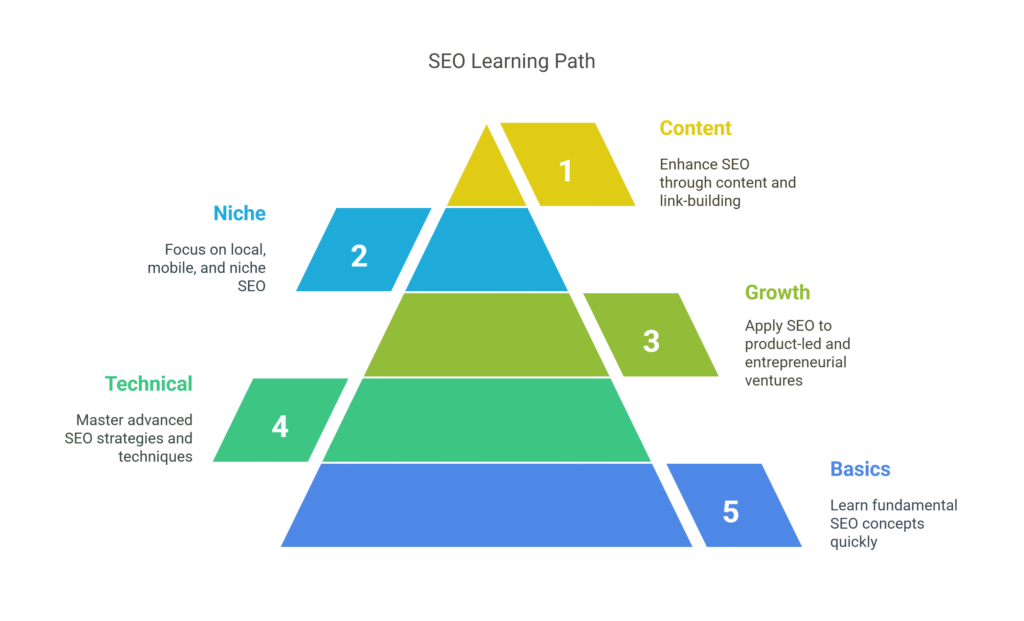
Let’s break down the best SEO books by what you’re trying to accomplish. This way, you can jump straight to the section that matches your current needs and skill level.
1. For Beginners: Learn the Basics, Fast
Perfect if you’re new to SEO and want to build a solid foundation without getting overwhelmed by technical jargon.
SEO by Adam Clarke (latest yearly edition)
This book is like having a patient mentor walk you through every aspect of SEO. Clarke breaks down complex concepts into bite-sized pieces that actually make sense. What sets this apart from other beginner books is how current it is – you won’t find outdated advice about keyword density or link farms here.
Why Read: Updated every year (check that you buy the latest edition), written in simple language that doesn’t assume you have a computer science degree, and covers both on-page and off-page SEO with real examples.
Best For: Digital marketing newbies, small business owners who need to handle their own SEO, and anyone who’s tried to learn SEO before but got confused by overly technical explanations.
What you’ll learn: How to research keywords that actually matter, the difference between SEO tactics that work and those that will get you penalized, and step-by-step processes for optimizing your website.
The SEO Blueprint by Ryan Stewart & David Krevitt
If you’re the type of person who learns best by following a system, this book is your new best friend. Stewart and Krevitt don’t just tell you what to do – they give you the exact templates and checklists they use in their agencies.
Why Read: System-focused approach that takes the guesswork out of SEO, action-oriented with real templates you can download and use immediately.
2. Technical SEO & Advanced Strategies
For SEOs ready to tackle the nitty-gritty details like site speed optimization, Core Web Vitals, crawling issues, and advanced schema markup.
The Art of SEO by Eric Enge, Stephan Spencer, and Jessie Stricchiola
This is the book that serious SEO professionals keep on their desk as a reference guide. At more than 770 pages in its 4th edition (O’Reilly, 2023), it’s comprehensive enough to serve as an SEO encyclopedia, but well-organized enough that you can find exactly what you need quickly.
Why Read: Deep dive into enterprise-level SEO challenges, covers technical SEO topics that most books skip over, and written by authors who’ve been in the SEO industry since the early days of Google.
Best For: Developers who need to understand SEO, tech-savvy marketers working on large websites, and SEO professionals who want to level up to enterprise-level strategies.
The technical SEO section alone is worth the price of the book. You’ll learn how to diagnose and fix crawling issues, optimize for Core Web Vitals, and implement advanced schema markup that can dramatically improve your search visibility.
3. Product-Led, Growth & Entrepreneurial SEO
For founders, indie hackers, and marketers who want to build sustainable organic growth engines for their businesses.
Product-Led SEO by Eli Schwartz
This book completely changed how I think about SEO strategy. Instead of focusing on individual keywords and tactics, Schwartz teaches you to think about SEO as a product that serves your users and business goals.
Why Read: Moves beyond traditional keyword-focused SEO to strategic thinking, perfect for understanding how SEO fits into broader business objectives, and written by someone who scaled SEO at major companies like SurveyMonkey.
Best For: SaaS companies looking to build organic acquisition channels, founders who want to understand SEO strategy without getting lost in tactics, and marketers responsible for growth beyond just traffic.
Schwartz introduces concepts like SEO product-market fit and shows you how to prioritize SEO initiatives based on business impact rather than just search volume. This strategic approach is what separates good SEOs from great ones.
4. Local, Mobile & Niche-Focused SEO
Highly targeted strategies for specific SEO challenges and specialized industries.
Local SEO Secrets by Roger Bryan
If you’re working with local businesses, this book will teach you strategies that most SEOs don’t know. Bryan reveals tactics for dominating local search results that go far beyond just claiming your Google Business Profile listing.
Why Read: Focuses specifically on ranking in Google Maps and localized search results, includes case studies from actual local businesses, and covers reputation management strategies that impact local rankings.
Best For: Local businesses wanting to dominate their geographic area, service providers like plumbers, lawyers, and restaurants, and SEO professionals specializing in local clients.
You’ll learn advanced local SEO tactics like citation building, local link building strategies, and how to optimize for “near me” searches that convert at incredibly high rates.
5. Content & Link-Building Focused Books
Because great content and quality backlinks are still the foundation of successful SEO.
Content Chemistry by Andy Crestodina
This book bridges the gap between content marketing and SEO better than anything else I’ve read. Crestodina shows you how to create content that both search engines and humans absolutely love.
Why Read: Step-by-step content strategy that’s aligned with SEO best practices, practical advice for content promotion and distribution, and frameworks for measuring content performance beyond just traffic.
Best For: Bloggers who want their content to actually rank, copywriters expanding into SEO, and agencies managing content marketing for clients.
The book includes detailed processes for keyword research, content optimization, and promotion strategies that can double or triple your content’s reach and impact.
Link Building Mastery by Julian Goldie
Link building is still one of the most important ranking factors, but it’s also one of the most misunderstood aspects of SEO. Goldie cuts through the confusion with practical, white-hat strategies that actually work.
Why Read: Focuses on sustainable link building tactics that won’t get you penalized, includes email templates and outreach strategies, and covers both traditional and creative link building approaches.
You’ll learn how to identify high-quality link opportunities, craft outreach emails that get responses, and build relationships that lead to long-term link building success.
What’s New in SEO Books for 2026 & Beyond

The SEO landscape has evolved dramatically in recent years, and the best SEO books are keeping pace with these changes. Here’s what’s different about SEO education in 2026:
Google’s Core Updates and Helpfulness
Recent Google updates have fundamentally changed what it takes to rank well. The best 2026 SEO books address these changes head-on, focusing on creating genuinely helpful content rather than gaming the system.
Google folded its helpful content system into its core ranking systems in the March 2024 core update, so helpfulness is no longer a separate update. Books that have not been updated since may that haven’t been updated may still recommend outdated tactics. Google’s official guidance emphasizes creating helpful, people-first content, with content quality signals playing an increasingly central role in rankings.
Core Web Vitals and Performance SEO
Google says its ranking systems use Core Web Vitals, though they count for less than relevance and helpfulness, and the best SEO books include detailed sections on optimizing for Core Web Vitals. Technical SEO books now include specific recommendations for improving Largest Contentful Paint, Interaction to Next Paint, and Cumulative Layout Shift.
AI and Machine Learning in SEO
Smart SEOs are already using AI tools to scale their content creation and optimization processes. Forward-thinking books address how to use tools like ChatGPT or Claude for keyword research, content optimization, and competitive analysis while maintaining the human touch that Google values.
Key Takeaways & What Each Book Does Best
Rather than trying to read every SEO book ever written, focus on the ones that match your current needs and skill level. Here’s what each of our top picks excels at:
SEO by Adam Clarke: Best Beginner Overview
If you can only read one SEO book this year, make it this one. Clarke explains complex SEO concepts in simple terms without dumbing them down. You’ll come away with a solid understanding of how SEO actually works and a clear action plan for improving your rankings.
The Art of SEO: The Technical SEO Bible
This is the book you keep coming back to when you encounter technical SEO challenges. It’s comprehensive enough to serve as a reference guide but practical enough to implement immediately. The crawling and indexing section alone has helped me solve countless technical issues.
Product-Led SEO: Think Like a Strategist, Not a Tactician
Schwartz teaches you to think about SEO as a business strategy rather than just a marketing tactic. This shift in perspective is what separates good SEOs from great ones. You’ll learn to prioritize SEO initiatives based on business impact rather than just search volume.
Content Chemistry: Where Content Marketing Meets SEO
Crestodina shows you how to create content that serves both search engines and real humans. The book includes practical frameworks for content planning, optimization, and promotion that can dramatically improve your content’s performance.
How to Choose the Right SEO Book for Your Situation
With so many great SEO books available, how do you choose the right one? Here’s a framework that will help you make the best decision:
By Skill Level:
- Beginner: Start with Adam Clarke’s yearly SEO guide (latest edition) or “The SEO Blueprint” to build foundational knowledge
- Intermediate: “Product-Led SEO” or “Content Chemistry” will help you think more strategically
- Expert: “The Art of SEO” or “Technical SEO Guide” for advanced tactics and troubleshooting
By Primary Focus Area:
- Technical SEO: “The Art of SEO” for comprehensive coverage
- Content Marketing: “Content Chemistry” for content that ranks and converts
- Local Business: “Local SEO Secrets” for geographic dominance
- Mobile Optimization: “Mobile SEO: The Ultimate Guide” for mobile-first strategies
- Business Strategy: “Product-Led SEO” for strategic thinking
By Preferred Learning Format:
- Print Books: Check the format options for each title before you buy
- eBooks: Kindle versions with highlighting and note-taking features
- Audiobooks: Perfect for learning during commutes or workouts
How to Get the Most Value from SEO Books
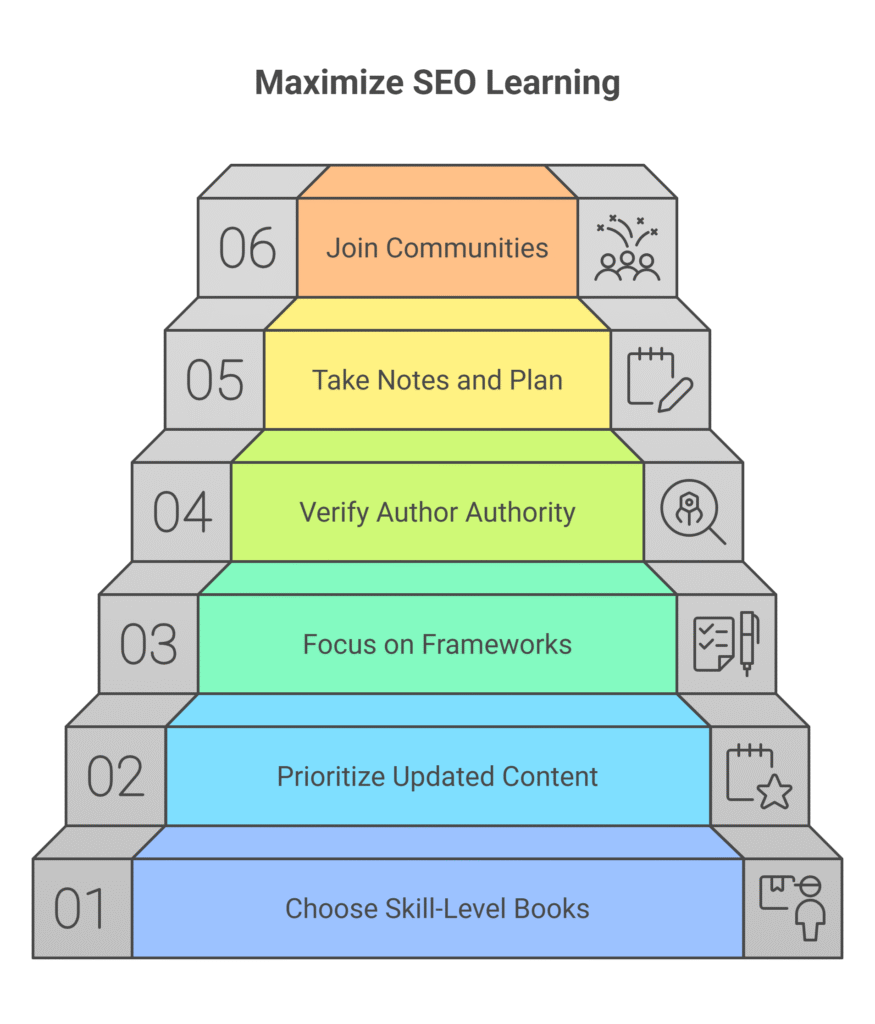
Reading SEO books is just the first step. Here’s how to maximize your learning and actually improve your rankings:
- Choose Based on Your Current Skill Level: Don’t try to jump ahead to advanced books if you haven’t mastered the basics. Build a solid foundation first.
- Look for Recently Updated Content: SEO changes rapidly. Prioritize books updated within the past 12-24 months to ensure you’re learning current best practices.
- Focus on Action-Ready Frameworks: The best SEO books include checklists, templates, and step-by-step processes you can implement immediately.
- Verify Author Authority: Check the author’s LinkedIn profile, case studies, and track record in the SEO industry. Learn from practitioners, not just theorists.
- Take Notes and Create Action Plans: Don’t just read passively. Take notes on key concepts and create specific action plans for implementing what you learn.
- Join Communities: Many of these authors have active communities where you can ask questions and get additional insights.
The difference between reading about SEO and actually getting results is implementation – read with a notebook in hand and a website ready to test on.
What to Read Next
Once you’ve absorbed the insights from these SEO books, here are some related topics that will help you continue your SEO education:
Understanding the broader digital marketing landscape will help you see how SEO fits into your overall marketing strategy. Learning about paid search, social media marketing, and conversion optimization will make you a more well-rounded marketer.
Staying current with SEO news and algorithm updates is crucial for long-term success. Follow reputable SEO news sources and consider joining professional communities where experienced SEOs share insights and strategies.
The Bottom Line: Your SEO Education Investment
Here’s the truth about learning SEO: you can spend thousands of dollars on courses and certifications, or you can invest $200-300 in the right books and get better, more comprehensive education.
The authors of these books have decades of combined experience and have tested their strategies across thousands of websites. When you read their books, you’re getting access to insights that would cost thousands of dollars to learn through trial and error.
Start with one book that matches your current skill level and business needs. Read it thoroughly, implement the strategies, and measure your results. Then move on to the next book that will help you tackle your biggest SEO challenges.
Remember: SEO is not about quick tricks or hacks. It’s about understanding how search engines work, creating valuable content for your audience, and building sustainable organic growth for your business. These books will teach you how to do exactly that.
The best time to start learning SEO was five years ago. The second best time is right now. Pick up one of these books today and start building the SEO skills that will drive organic growth for years to come.