
You can build useful links without a large budget. What you cannot do is skip the work: cheap shortcuts usually cost more later, in wasted spend or in links Google ignores. This guide covers eight low-cost tactics that hold up, the free tools that support them, how to judge whether a link is worth having, and when it starts to make sense to pay for help. All 8 tactics below are realistic for link building on a small budget.
Why backlinks still matter on a small budget
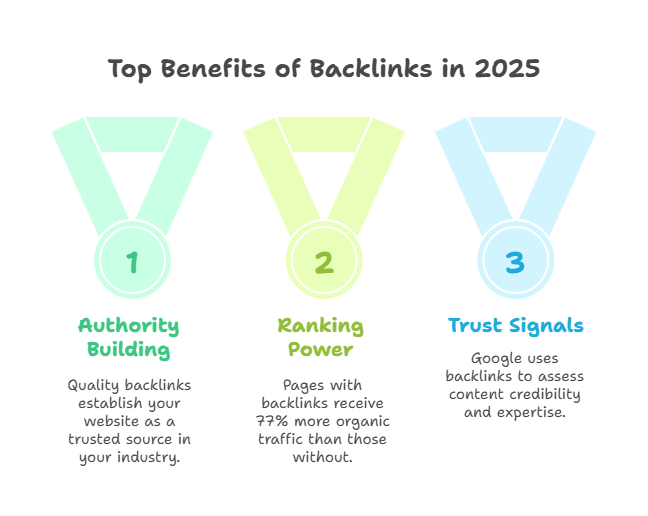
Google describes link analysis, including PageRank, as one of its core ranking systems in its guide to ranking systems. Links help it understand what a page is about and how useful others find it.
Ahrefs’ 2023 search traffic study of about 14 billion pages found that 96.55% got no traffic from Google. The same study found a correlation between referring domains and search traffic. Correlation is not proof, but it matches what most practitioners see: on competitive topics, pages rarely rank without some links.
The good news for small budgets is that relevance matters more than volume. A handful of links from sites your customers actually read can move a page that is already well written.
Before you start: fix the basics
- Have something worth linking to. A useful guide, a free template, original data or a genuinely good product page.
- Pick a few target pages. Spread effort across two or three pages that are close to page one, not your whole site.
- Use free data. Google Search Console shows which pages already get impressions, and Ahrefs Webmaster Tools gives free backlink data for sites you own.
8 link building tactics that cost time, not money
1. Turn unlinked brand mentions into links
If people already write about your company, product or founder without linking, a short, polite email often fixes it. It is the highest-converting outreach most small teams can do. Set up Google Alerts for your brand and product names, then follow my guide to unlinked brand mentions.
2. Answer journalist requests
HARO, the free service many guides still recommend, was rebranded as Connectively and shut down in December 2024. The free or low-cost alternatives today are Qwoted, Featured, Source of Sources and MentionMatch (formerly Help a B2B Writer), plus the #JournoRequest hashtag on X (Twitter).
What works: respond quickly, answer the exact question in two or three short paragraphs, include one specific example or number from your own work, and add a one-line bio showing why you are qualified. Only pitch where you have real expertise.
3. Fix broken links on relevant pages
Find pages in your niche that link to resources which no longer exist, then suggest your page as a replacement. Ahrefs Webmaster Tools and the free Check My Links Chrome extension show broken outbound links. You are helping the editor fix their page, so this approach gets better replies than a cold request.
4. Get listed on genuine resource pages
Search "your topic" inurl:resources or intitle:"useful resources". Pitch only pages that are maintained and relevant, and only when your page adds something their list is missing.
5. Write guest contributions for real publications
Writing for blogs your customers read builds links and authority at the same time. Choose sites with real editors and real traffic, write something you would be proud to publish on your own blog, and let the editor decide what gets linked. My guest posting guide covers the full process.
6. Create one small linkable asset
You do not need a big research budget. A one-page template, a short survey of your customers, a calculator built in a spreadsheet, or a list of statistics you have personally verified can earn links for years. See my link baiting guide for formats that work.
7. Use partner, integration and customer relationships
SaaS companies often have links waiting: integration directories, technology partner pages, app marketplaces, and suppliers or customers who list the tools they use. These links exist because the relationship is real, which is exactly what makes them valuable.
8. Build a profile on relevant review and community sites
Software review sites, startup launch platforms and industry communities rarely pass much ranking value directly (many links are nofollow), but they bring referral traffic and brand searches, and they make it easier for writers to find and cite you.
Free and low-cost tools
A small budget needs only a few tools:
- Google Search Console (free) – the Links report shows which sites Google sees linking to you; Performance shows which pages are close to page one.
- Ahrefs Webmaster Tools (free for sites you own) – backlinks, broken links and site audit for your own domain.
- Google Alerts (free) – brand and competitor mentions.
- Check My Links (free Chrome extension) – broken links on any page you visit.
- Hunter – its free plan includes a limited number of monthly email searches, enough for a small campaign.
- Google Sheets (free) – your prospect list and outreach tracker.
Paid suites such as Ahrefs, Semrush, SE Ranking and Mangools add competitor backlink data. Their plans and prices change often, so check the vendor’s pricing page, and consider a single month of access to run a competitor gap analysis rather than an ongoing subscription.
How to evaluate link quality
On a small budget, every link has to count. Check these before you invest time in a prospect:
- Relevance: does the site write for your audience? This matters more than any score.
- Real traffic: an estimated organic traffic trend that is stable or growing. I use 2,000 monthly organic visitors as the floor for client placements.
- Authority metrics: Ahrefs Domain Rating (DR) and Moz Domain Authority (DA) are separate third-party scores. Use one consistently and treat it as a filter, not a goal. A link from a stronger, relevant site often helps more, but a relevant smaller site can still be worth it. My Domain Authority explainer covers the difference.
- A real editor: named authors, edited content, and evidence that not everything gets published.
- Clean outbound links: no pattern of unrelated casino, loan or pharma links.
Red flags
- Sites that sell dofollow links to anyone, with no editorial review.
- Networks of sites that link to each other, thin “about” pages and recycled content: signs of a private blog network.
- Cheap mass packages promising hundreds of links for a small fee, wherever they are sold.
- A traffic graph that fell off a cliff.
Budget digital PR
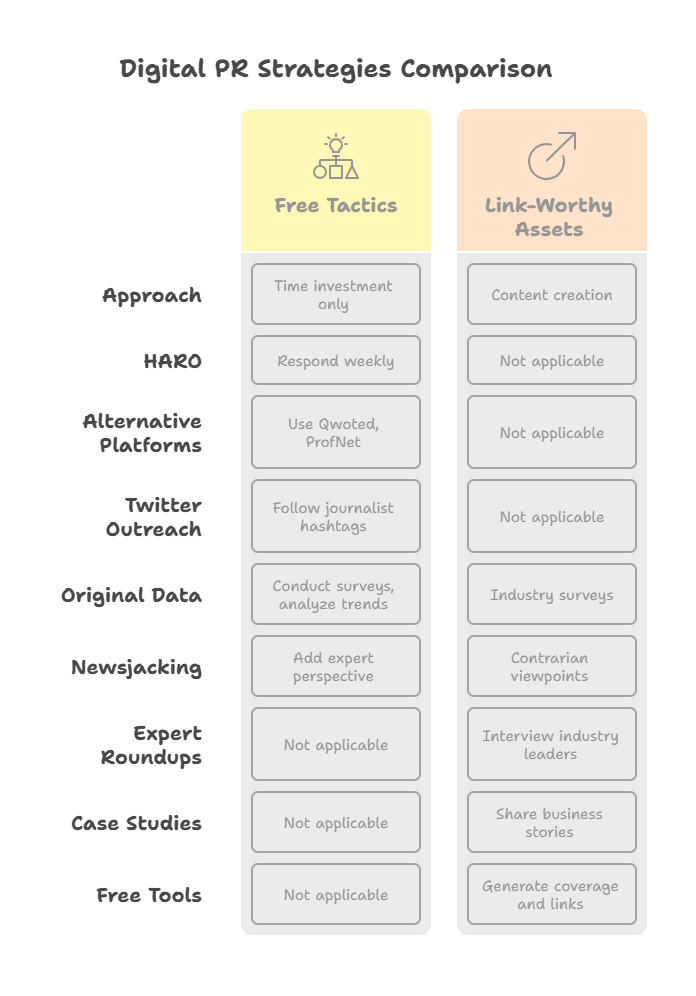
Digital PR does not require an agency retainer. Three approaches work on a small budget:
- Expert commentary: the journalist request platforms in tactic 2.
- Small original data: survey your customers or analyse your own product data, then pitch the one most surprising finding to writers who cover your niche.
- Local and community angles: events, local business associations and alumni or founder communities often link to members.
What to avoid, even when it is cheap
Google’s link spam policy lists the tactics that put a site at risk: buying or selling links that pass ranking credit, excessive link exchanges, automated link building programs, low-quality directory and comment links, and widely distributed footer or widget links.
- Link exchanges. “Link to me and I’ll link to you” at scale is a link scheme. See backlink exchange.
- Paying a site owner to add a link without disclosure. Google asks for paid links to be qualified with
rel="sponsored". This applies to paid link insertions as much as to new articles; see my guide to niche edits. - Offering something in exchange for a link. When you suggest a content improvement, offer it because it helps the page, and let the editor decide whether to link.
- Automated tools and blog comment blasts. They waste time and can trigger a manual action.
DIY or agency: when to pay for help
DIY link building makes sense when you have more time than money, a few target pages, and someone who enjoys writing to people. It becomes expensive when your time is worth more than the links, or when you compete with sites that have hundreds of referring domains.
If you do work with a provider, ask to see the sites they place on, their minimum traffic requirement, how they vet editors, and what happens if a link disappears. I work with sites that have at least 2,000 real monthly organic visitors and a human editor, clients pay upfront per link or package, a link that does not go live is replaced or refunded in full, and every live link has a 6-month replacement guarantee. See my link building pricing or the questions in my guide to link building scams.
A real example of starting small
Webisoft, a software development agency in Montreal, started with 51 referring domains. Over 14 months, 280 links on relevant sites took its organic traffic from 226 to 3,173 visits a month (+1,304%). The lesson for small sites: consistent, relevant links compound. Read the Webisoft case study.
Measuring results
- Rankings and clicks for the target pages in Google Search Console.
- Referring domains gained and lost (Ahrefs Webmaster Tools or GSC Links).
- Referral traffic and conversions from linking sites in GA4.
Expect weeks, not days. Most links need time to be crawled, and rankings for competitive terms move over months.
Conclusion
A small budget forces focus, and focus is good for link building: a few strong pages, a short list of relevant sites, and tactics that earn links on merit. Start with brand mentions and broken links, add guest contributions and one small asset, and avoid anything that promises links without editorial judgment.
Want to know how many links stand between you and the sites outranking you? Get a free link gap analysis or see pricing.